

When a lawn loses its color, reaching for a bag of high-nitrogen fertilizer offers a quick green-up, but it doesn’t fix poor soil.
If you want a dense, drought-resistant lawn that lasts, the secret lies beneath the surface. Compost top-dressing naturally improves soil structure, boosts organic matter, and feeds beneficial microorganisms—building healthier turf without relying solely on synthetic chemicals.

What Is Compost Top-Dressing?
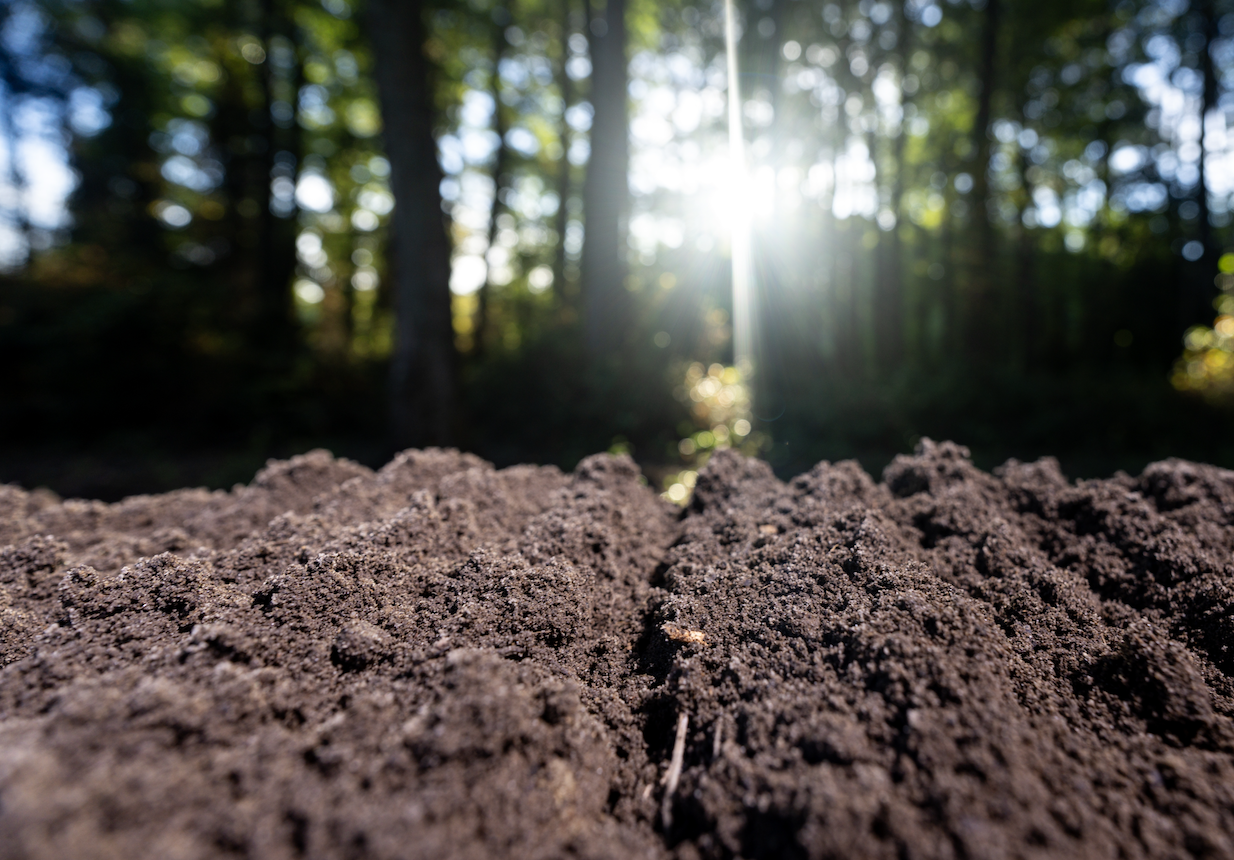
It’s the process of spreading a thin layer (1/8″ to 1/4″) of finely screened, fully organic compost across your existing lawn. Rain, earthworms, and soil microbes naturally work the rich carbon and nutrients down into the root zone.
3 Common Homeowner Misconceptions
- “It will smother my grass.” False. Finely screened compost settles quickly to the soil line, allowing grass blades to push right through within days.
- “It’s full of weed seeds.” False. High-heat, professionally managed composting reaches 135°F–160°F, which neutralizes weed seeds and pathogens.
- “Fertilizer is all a lawn needs.” False. Synthetic fertilizers supply basic nutrients (N-P-K), but they don’t add living biology or organic matter. Over time, relying only on synthetic salts can deplete soil health.
How It Improves Soil Biology & Structure
- Feeds the Soil Food Web: Introduces billions of beneficial bacteria and fungi that unlock natural nutrients for grass roots.
- Boosts Water Retention: Every 1% increase in soil organic matter helps soil hold roughly 20,000 gallons of water per acre—drastically reducing summer watering.
- Relieves Compaction: Organic humus binds soil into loose aggregates, opening up pore spaces for air, water, and deep root growth.
- Natural Defense: Healthy compost stabilizes pH and introduces beneficial fungi that naturally suppress lawn diseases like brown patch and root rot.
Best Application Timing for Long Island
- Early Autumn (Sept – Oct) — Best: Cool-season grasses actively store root energy in fall. Pairing autumn aeration, overseeding, and compost top-dressing delivers the best germination and depth.
- Early Spring (April – May) — Secondary: A great natural jump-start to help turf recover from winter stress.
Pro Tip: Combine top-dressing directly with core aeration. Aeration holes allow compost to drop straight into the root zone for faster results.
Build Healthier Turf From the Ground Up
Ready to restore your soil’s natural vitality? Contact GroundUp Soil Co. today to schedule a soil assessment or book a professional top-dressing application.


Leave a Reply